Thailand Tours & Small Group Trips in 2026
ยินดีต้อนรับสู่ประเทศไทย!
In northern Thailand, hill tribes, temples, and mountains await. In the south, there are paradise islands with water so clear that you simply have to dive in to believe it.

Things to do and see
Experiences that define Thailand
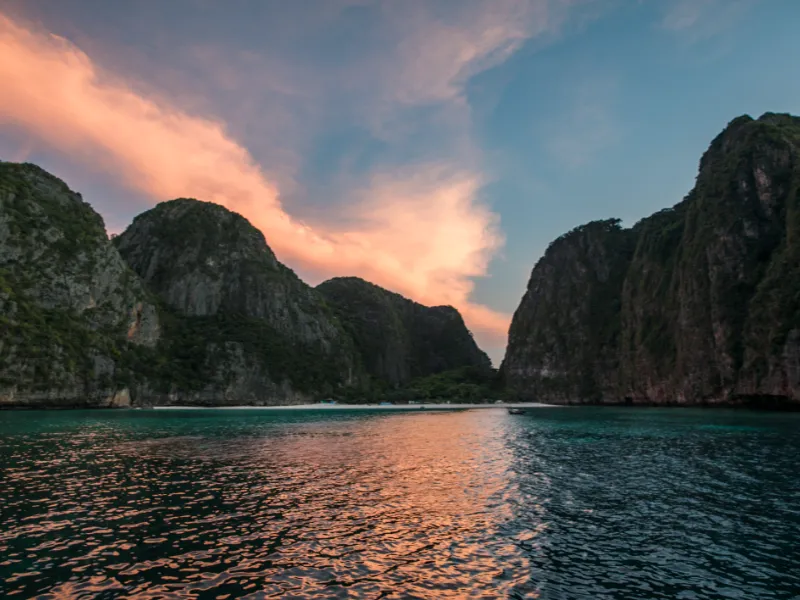
Phi Phi sunrise cruiseCruise to Phi Phi at sunrise—calm seas, limestone cliffs, and early-morning views before the crowds.
Chiang Mai bike tourBike Chiang Mai—temples, back lanes, and countryside rides through northern Thailand’s cultural heart.
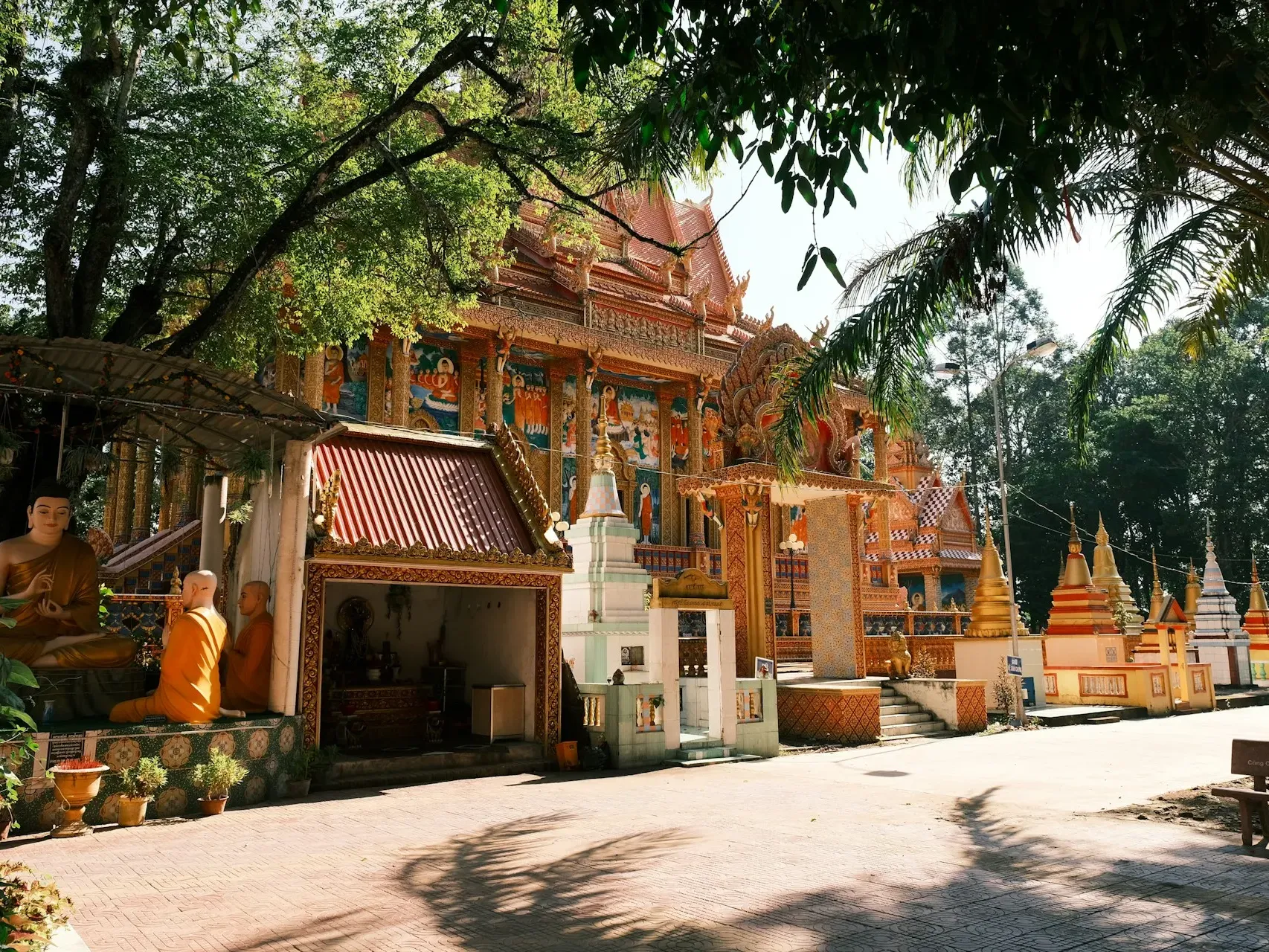
Ayutthaya temple hopsTemple-hop Ayutthaya—ancient ruins and Buddha statues in Thailand’s former capital, a UNESCO-listed highlight.
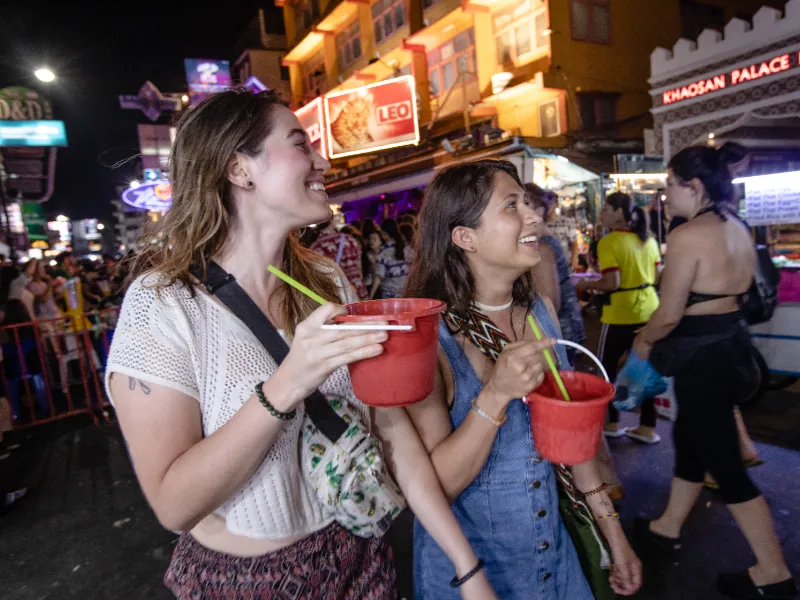
Street food feastingFeast on street food—night markets, sizzling stalls, and must-try bites from Asia’s best local flavours.
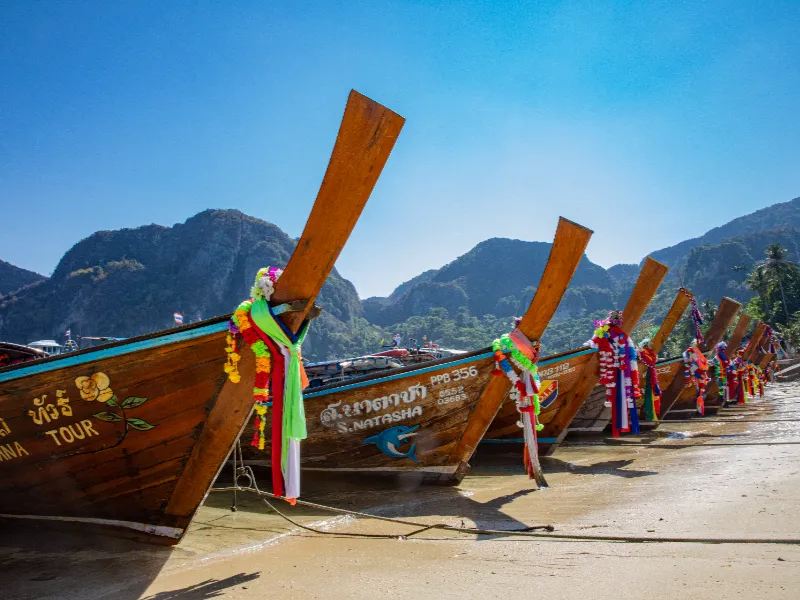
Krabi beach dayEnjoy a Krabi beach day—limestone cliffs, turquoise water, and island vibes on Thailand’s Andaman coast.

Thai yoga sessionJoin a Thai yoga session—stretch, breathe, and reset with mindful movement inspired by local wellness traditions.
Best time to travel
Lantern festivals & full moon parties
Nov for Loi Krathong, when lanterns float on rivers and lakes nationwide. Party on the beach under a full moon.

Most popular time
Beach parties and festivals are November – February

Most budget-friendly
Wet season is June – October

Favourite season
Most people like to visit during December – February

Culturally significant times
Visit in April for Songkran Water Festival (Thai New Year)
Need to know
Thailand at a glance

Time Zone
Indochina Time (UTC +7)

Climate
Two distinct seasons: wet and dry

Currency
Thai Baht (THB)

Transportation
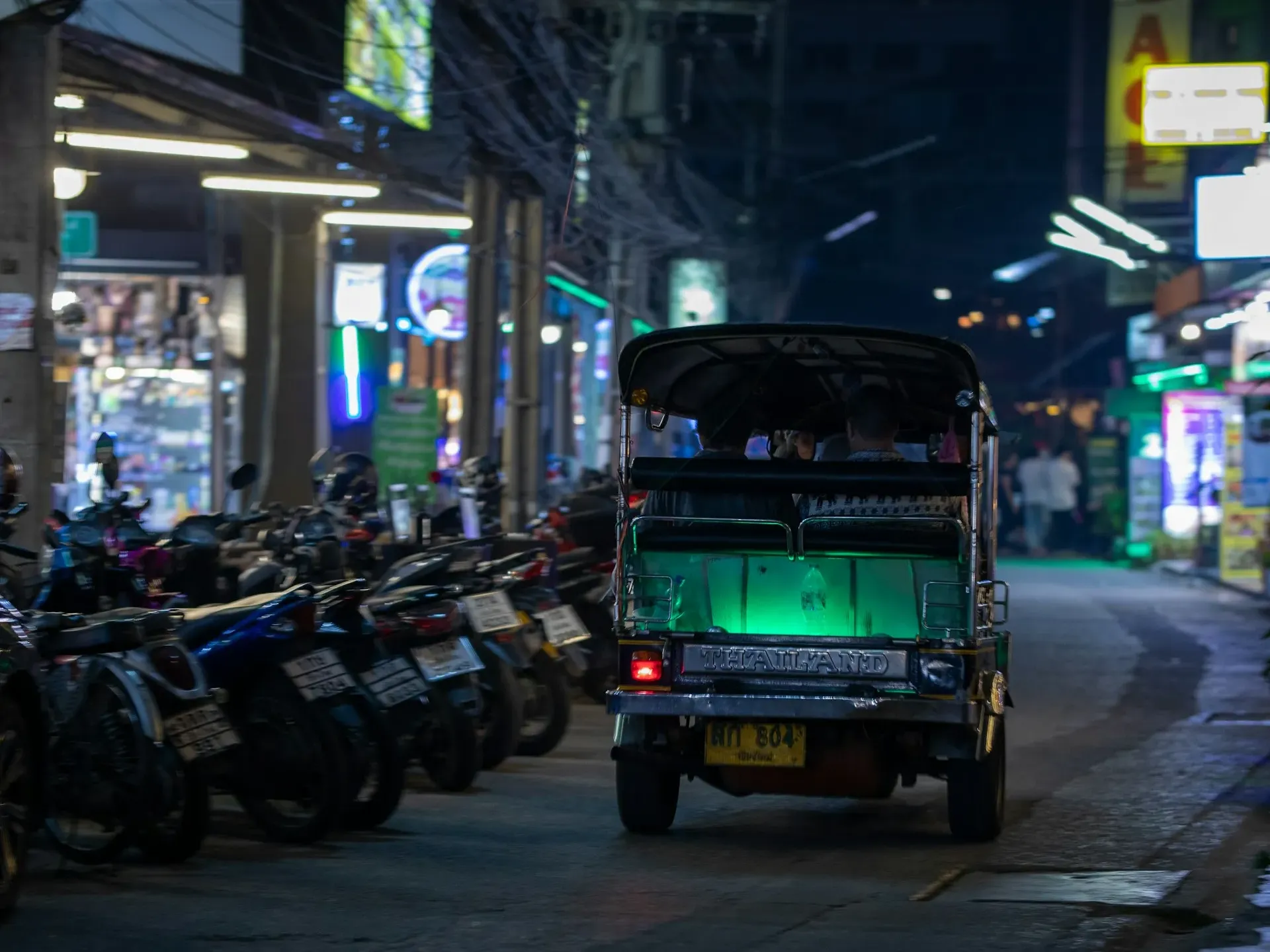
Taxis, scooters, trains, subways, tuk-tuks, and boats

Local cuisine
Pad Thai, tom yum soup, and green papaya salad

Languages Spoken
Thai
Because planning should feel exciting, not exhausting
Frequently asked questions
Many travellers arriving into Thailand get 30 days on arrival without applying for a visa beforehand (including Canada, the US, the UK, and the majority of EU countries). Five (Peru, Argentina, Brazil, South Korea, and Chile) get 90 days.
Other countries however will need to apply for a visa beforehand. These include (but are not limited to) India, Cyprus, Romania, Mexico and China. You can find out if you need a visa or not via [visaguide.world.](https://visaguide.world/asia/thailand-visa/who-needs-a-visa-for-thailand/)
Please note that a yellow fever vaccination will be required upon entry if you’re travelling from the following countries in [Africa](https://www.fitfortravel.nhs.uk/advice/disease-prevention-advice/yellow-fever/yellow-fever-risk-areas).
It will also be required if you’re coming from the following regions in Latin America: Colombia (the entire country except Bogotá); Ecuador (applies only to Morona-Santiago, Napo, Orellana, Pastaza, Sucumbíos, and Zamora-Chinchipe); Paraguay (the entire country except Asunción); Peru (the entire country except Lima, Cajamarca, Cuzco, Lambayeque, Machu Picchu, Ruta de los Incas, Piura, Tumbes); Trinidad and Tobago (the entire country except the urban areas of Port of Spain and for travellers in transit or whose itineraries are limited to the island of Tobago).
Other recommended vaccinations include diphtheria, hepatitis a, hepatitis b, diphtheria, rabies, japanese encephalitis and tetanus.
If you’re looking for the best weather, then head to Thailand during the cool, dry season, which runs from November to early April. Temperatures range from 28.5 to 36°C (84°F to 97°F). The exception here is the Lower Gulf of Thailand, which includes the islands of Koh Samui, Ko Pha-ngan, and Koh Tao. These islands see the most rainfall from September through December.
If you travel to Thailand during the shoulder season (late April to early June and October), you’ll miss the swell of high-season crowds and dodge much of the monsoon or low season (July to September). In terms of festivals, Songkran takes place on April 13\. Loi Krathong is held on the full moon of the 12th month in the lunar calendar — usually November.
Thailand’s climate is defined by the rainy and dry seasons, which change depending where you are within the country. Northern Thailand tends to have its dry season during the months of November to May, while June to October is the rainy season.
Southern Thailand can be split into two — the west sees the heaviest rainfall between the months of April to October, whereas the east coast sees the most rain from September to December. The rest of the year sees warm, dry weather.
Throughout the year, temperatures across Thailand range from 25°C to 34°C (77-93°F), with April through May being the hottest months and January the coldest.
Tipping isn’t customary in Thailand and it’s not expected either. However, if you feel like you’ve received good service in a restaurant, or by a driver or similar, then a tip will no doubt be greatly appreciated\!
Internet access in Thailand tends to be excellent if you’re in towns or cities — even better than in the western world. However, be prepared if you’re in rural or remote areas for it to be limited.
There are ATMs widely available within towns and cities, which tend to accept VISA and Mastercard. Expect a rather hefty transaction fee.
In more rural areas or in local villages, you might not be able to pay via credit or debit card, so make sure you bring enough cash with you.
In a word — yes\! Thailand is one of the most LGBTQ+-friendly countries in Asia, if not the world. It has a thriving transgender community, and in March 2024, Thailand’s lower house passed a bill giving legal recognition to same-sex marriage.
However, it should be noted that public displays of affection aren’t common in Thailand — even among straight people.
The national language of Thailand is Thai, spoken by about 53% of the population. Other languages spoken here include Lao, Chinese, Malay and Khmer.
‘The Land of Smiles’ is generally considered to be incredibly safe, though as with anywhere in the world, there are occasional things to be wary of.
Political tensions can sometimes arise in the capital Bangkok, which can occasionally cause protests. Keep your wits about you when it comes to swimming in the sea, as sometimes currents can be strong, and be careful when riding a moped or motorbike. It’s the leading cause of accidents for travellers while in Thailand.