Cambodia Tours & Guided Trips in 2026
សូមស្វាគមន៍មកកាន់ប្រទេសកម្ពុជា!
Cambodia offers striking contrasts — from ancient temples like Angkor Wat to quiet islands and life along the Mekong, it's a place of everyday rhythms, natural beauty, and layered culture.

Things to do and see
Experiences that define Cambodia
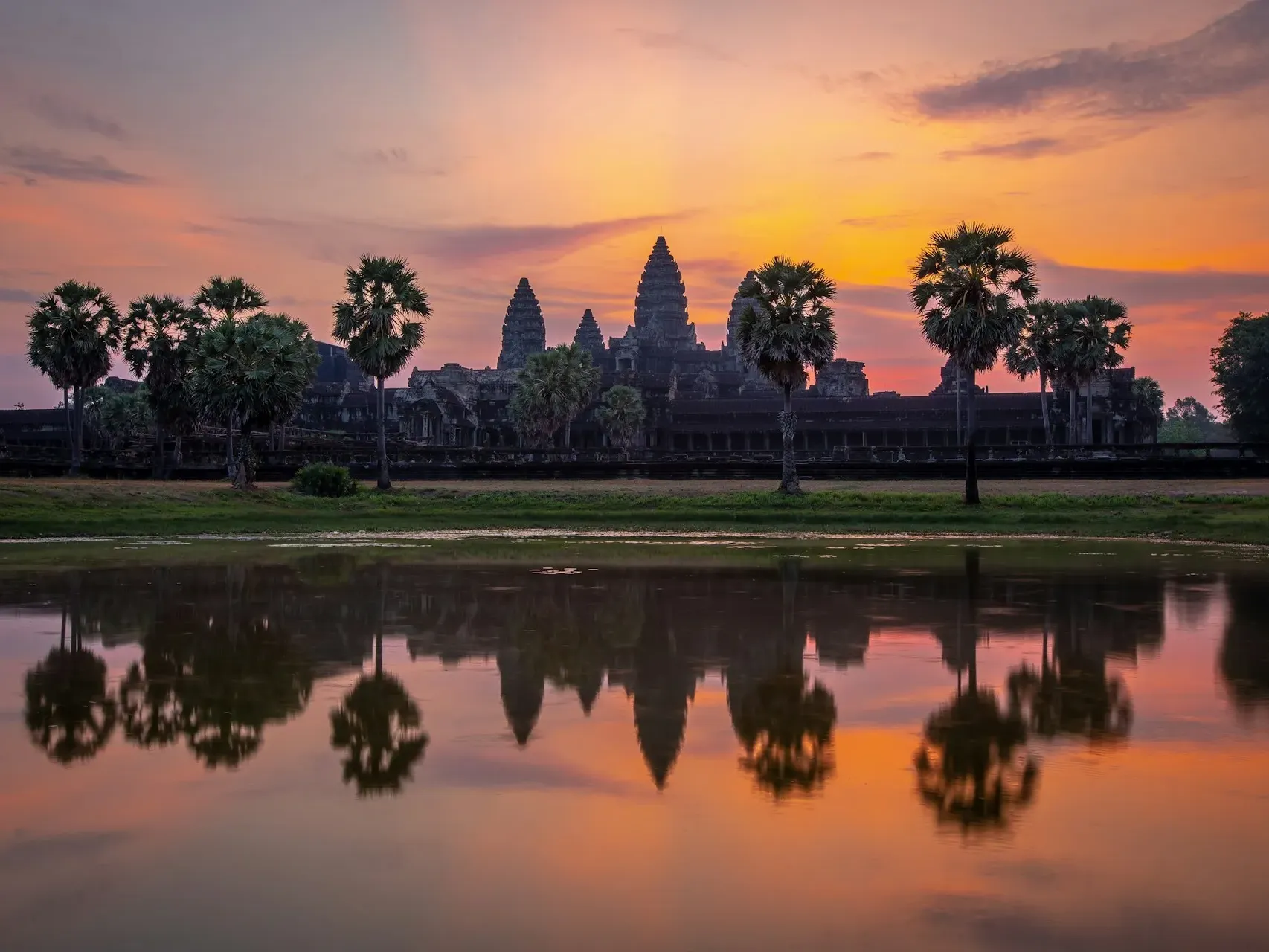
Sunrise at Angkor WatWatch sunrise at Angkor Wat—golden light over ancient towers and Cambodia’s most iconic temple complex.
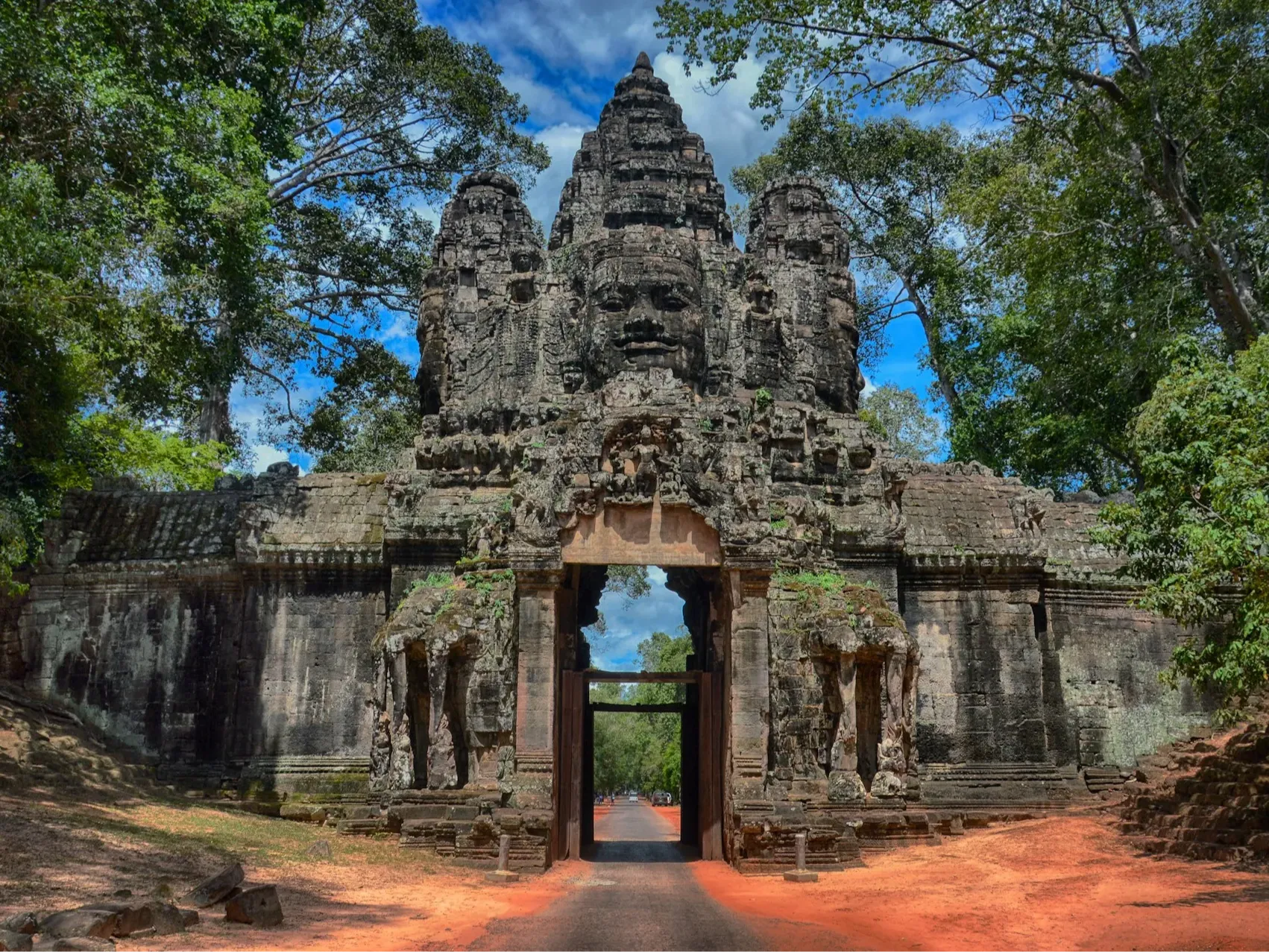
Siem Reap bicycle tourCycle Siem Reap—local villages, rice fields, and backroads that reveal everyday Cambodia beyond the temples.
Khmer cooking classTake a Khmer cooking class—fresh herbs, bold flavours, and Cambodian favourites made hands-on with local chefs.
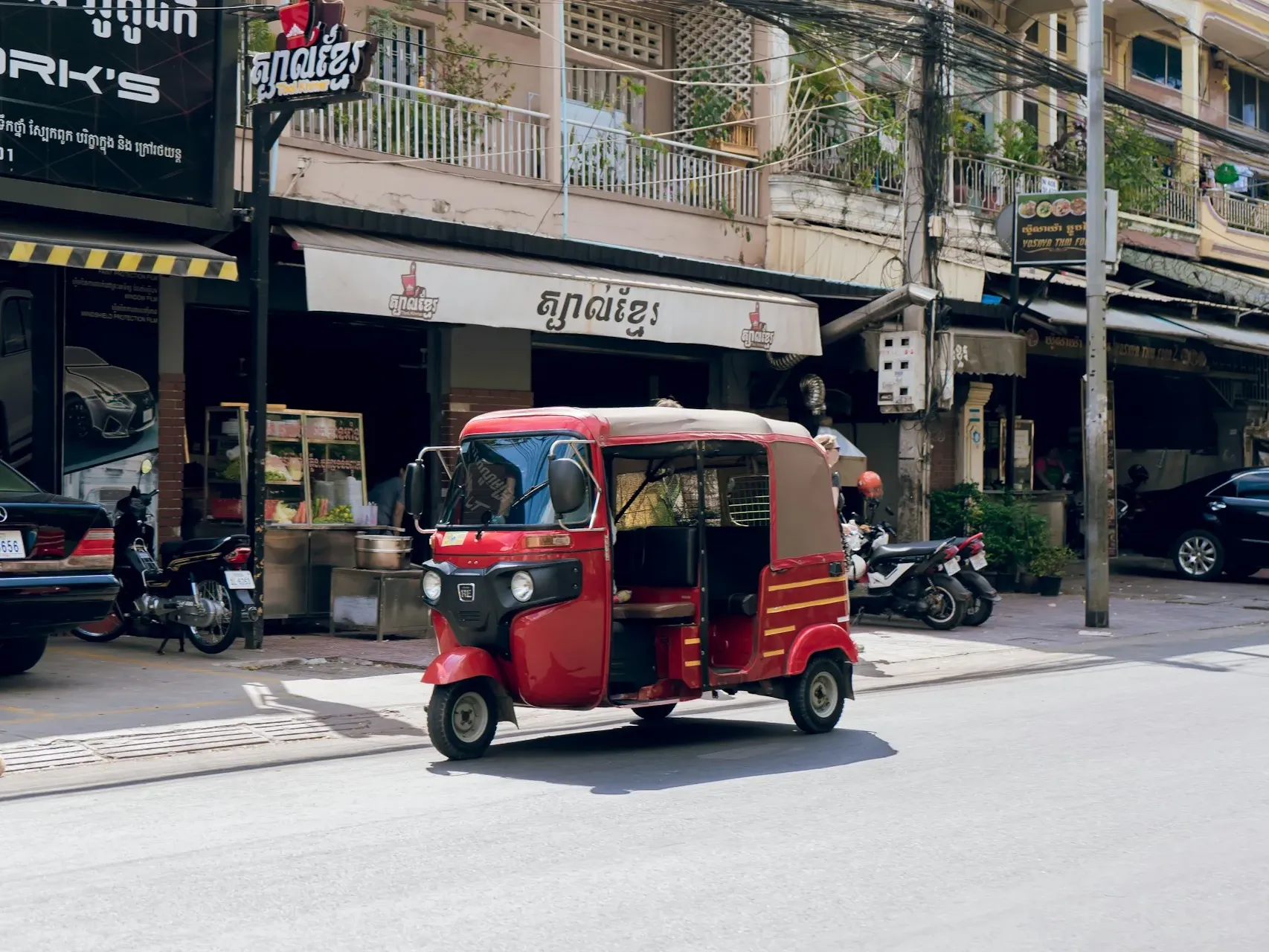
Phnom Penh tuk-tuk rideRide a tuk-tuk through Phnom Penh—markets, landmarks, and street life in Cambodia’s vibrant capital.
Kulen Waterfall hikeHike to Kulen Waterfall—jungle trails, sacred sites, and cooling swims near Cambodia’s Kulen Mountain.
Apsara dance showEnjoy an Apsara dance show—graceful Khmer storytelling, traditional music, and cultural heritage performances.
Best time to travel
Water festivals & boat races
Celebrate Bom Om Touk (Water Festival) in Nov and watch spectacular boat races on Tonlé Sap.

Most popular time
Peak temple exploring is best December - February

Most budget-friendly
Wet season is July - October

Favourite season
Most people like to visit during December - February

Culturally significant times
Visit in April for Khmer New Year and water festivals
Need to know
Cambodia at a glance

Time Zone
Indochina Time (UTC +7)

Climate
Tropical with wet and dry seasons

Currency
Cambodian Riel (KHR)

Transportation
Buses, taxis, tuk-tuks, and domestic flights

Local cuisine
Fish amok (coconut curry), beef lok lak, and nom banh chok noodles

Languages Spoken
Khmer
Because planning should feel exciting, not exhausting
Frequently asked questions
Like most tropical countries in the world, Cambodia experiences both wet and dry seasons. The wet season runs from May to October, and sees temperatures of around 25 to 33°C (77 to 91°F) and heavy downpours. It’s also very humid during this time of year — particularly in June, July and September. The dry season (November to April) sees hot temperatures with highs of 35°C (95°F) and minimal rainfall.
While there’s no bad time to visit Cambodia, the best time is generally considered to be from November to February. During these months, the weather is cooler and drier, making it ideal for exploring the temples of Angkor Wat and enjoying outdoor activities like hiking. March to early May can be quite hot, with temperatures often reaching 35°C (95°F) , while the rainy season runs from mid-May to October — meaning there are often torrential downpours.
It’s customary in Asia to tip service providers such as waiters, at approximately 10%, depending on the service. Tipping is expected — though not compulsory — and shows an expression of satisfaction with the people who have assisted you on your tour.
There are several times during the trip where there is opportunity to tip the local guides or drivers we use. You may do this individually, or your CEO will offer to collect the money and tip as a group. Recommendations for tipping drivers and local guides would range from USD $1.50-3.50 per person, per day depending on the quality and length of the service; ask your CEO for specific recommendations based on the circumstances and culture. Also, at the end of each trip if you felt your G Adventures CEO did an outstanding job, tipping is appreciated. The amount is entirely a personal preference, however as a guideline USD $20-25 per person, per week can be used.
Internet and Wi-Fi access has improved significantly in Cambodia over the past few years. Most cities, including Phnom Penh and Siem Reap, have pretty good coverage, with many cafes, hotels, and public places offering free Wi-Fi. Be prepared for it to be much less reliable when you’re in rural areas however.
Yes, there are ATMs in Cambodia, especially in cities like Phnom Penh and Siem Riep. Most ATMs accept Visa and Mastercard, though you might be charged withdrawal fees, so it’s worth checking with your bank before you travel. Be aware that some ATMs have withdrawal limits, and you should also carry cash with you if you’re heading into rural areas.
In a word, yes — Cambodia is generally an LGBTQ+-friendly destination. Same-sex relationships are legal here, and both Siem Reap and Phnom Penh have lively LGBTQ+ scenes. You should be aware that rural areas may be more conservative — it’s worth being discreet to avoid any unwarranted attention.
As part of their commitment, all CEOs receive LGBTQ+ inclusion training so every traveller feels respected and welcomed on all of our tours. We commit to making our tours a safe and inclusive place for people to express their authentic selves without judgement, free from any discriminatory language or harassment.
While travelling with G Adventures, all travellers must treat each other with dignity and respect to create an environment that is positive, safe, and where everyone feels welcome. You can find out more via our [LGBTQ+ travel page](https://www.gadventures.com/about-us/lgbtq-travel/).
The official language of Cambodia is Khmer, which is spoken by the majority of the population. English is also widely used, especially in tourist areas, and French is another language spoken by many.
In a word, no — the tap water in Cambodia isn’t generally safe to drink. You’re best sticking to bottled water which is cheap and readily available.
Please note however that all drinks provided on our tours are safe to drink (including drinks with ice), as well as the water in most hotels and restaurants visited on tour. If in doubt, please ask your CEO for further info.
Cambodia is generally considered safe for travellers, but, like with any destination in the world, it’s wise to take standard precautions. Petty crime, such as pickpocketing and bag snatching, can occur, particularly in crowded and touristy areas. You should also be aware that while rare, political protests can sometimes occur — take heed of local advice.
G Adventures takes all reasonable measures to ensure your safety and enjoyment while travelling with us. All of the included activities are properly vetted and regularly checked by us, and we take great care in choosing the right transportation, stays throughout your trip, and guides to lead your tour. However, there are always inherent risks when travelling — you can find out more via our [travel safety page](https://www.gadventures.com/travel-resources/safety/).
### China